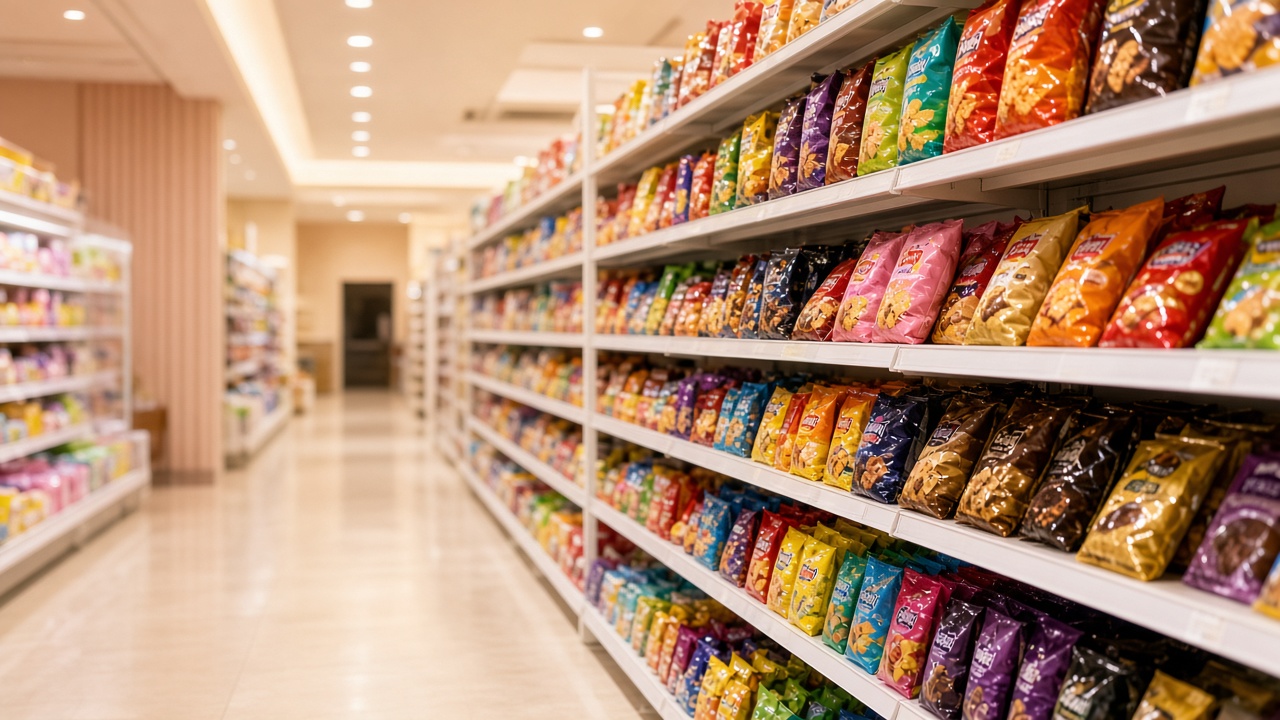
A grocery share leader can still lose the four-foot set
Convenience snacks are an interrupt. Pack size, price, and heat beat a center-store ranking.
Grocery center-store snacks are a destination category. The shopper came for the aisle. Convenience snacks are an interrupt. The shopper came for fuel, a drink, or a pack of nicotine, and the snack has a few seconds of sightline near the checkout or the coffee island. A brand that ships its grocery hero pack into that space is asking a 2,800-square-foot box to behave like a 60,000-square-foot supermarket. The lighting is not the problem. The trip is.
Pack size, price ladder, and messiness matter more than a national share rank. A sharing bag that needs a cart does not belong next to a single-serve that can be eaten one-handed in a cab. Heat and humidity on a travel-center lot punish coatings that survive a grocery air-curtain. Those are merchandising facts, not aesthetic ones. They are also why a launch that “won grocery” can still fail the first two feet of a coffee queue.
Dwell is the constraint
A two-minute dwell does not reward a 16-foot run. It rewards a facing that can be read at walking speed and a pack that does not require a second hand. Impulse candy, a single-serve salty, a protein pack that fits a cup holder — those SKUs are built for the trip the store already won. A destination cookie program that needs assortment to keep the shopper from going to the supermarket is a different purchase order. Mixing the two in one meeting is how a supplier wastes a buyer’s calendar and then calls the channel closed.
BLS food-at-home is the comparison set for the packaged bag. The shopper’s reference price for “food you take home” is that series, not a grocery circular the c-store does not run. When food-at-home moves and the convenience ring does not, the interrupt still has to clear a higher bar against a proven SKU. When food-at-home is quiet, a new facing still has to beat velocity, not a share ranking from a store that has a cart.
Heat, humidity, and the lot
Travel-center and rural lots are not grocery air-curtains. Chocolate coatings bloom. Bags that sit near a door sweat. A pack that looks right in a supermarket photograph can look tired by the second day on a south-facing clip strip. Operators who have already learned this the hard way will not give a second facing to a brand that learned it in a grocery case study. The floor at a convenience show will be full of both kinds of packs. The useful question is which one survives the lot.
DSD and warehouse routes are the other constraint. A c-store operator can receive what the route actually brings. A grocery reset crew that arrives on a calendar the convenience box does not have is not a go-to-market plan. If the supplier cannot say how the pack gets to a two-thousand-square-foot store that turns the set twice a week, the launch is a presentation.
The three questions
Can it sit in a four-foot set without a secondary display? Is the ring high enough to justify the facing against a proven impulse SKU? And does the supplier have a route an operator can actually receive? If the answer is a grocery case study, that is not a convenience story yet. This desk will keep asking those questions on the year-round file, not only in October. The aisle footage belongs to grocery. The interrupt belongs here.
Copying a center-store ranking into a c-store cooler is how brands waste a slot. The shopper did not come for the aisle. The snack has a few seconds. That is the beat. A launch that cannot answer the three questions on a Tuesday file is not waiting for October to become a convenience SKU.